Back

Raymond Cen

Projects

rcen.devOct 2026Static Astro site on Cloudflare Workers with an edge API, currently serving live Spotify now-playing data.

Personal site for recruiters covering my projects, experience and background. Pages are prebuilt with Astro and Tailwind and served from Cloudflare’s edge, with a Worker handling /api/* routes.

  • Modeled projects, experience and About content as typed Astro content collections with Zod schemas, so a missing field or malformed date fails the build instead of shipping.
  • Built a now-playing endpoint that refreshes a Spotify OAuth token, caches responses at the edge and stores the last-played track in Workers KV. A one-minute cron keeps it current with no visitors on the site, writing to KV only when the track changes.
  • Set up GitHub Actions CI that runs type checks, a production build and Lighthouse CI.

Key decision. Hosted on Cloudflare Workers with static assets instead of Cloudflare Pages. Pages covers a static site, but Workers runs code in front of the assets on chosen routes, which the Spotify endpoint needed. The trade-off was more configuration up front for routes, bindings and the cron trigger.

  • Astro
  • TypeScript
  • Tailwind CSS
  • Cloudflare Workers
  • Spotify Web API
FracFeedExtractorSep 2025 – Jun 2026Pipeline that screens ecology PDFs and extracts predator diet data with XGBoost and a local LLM.
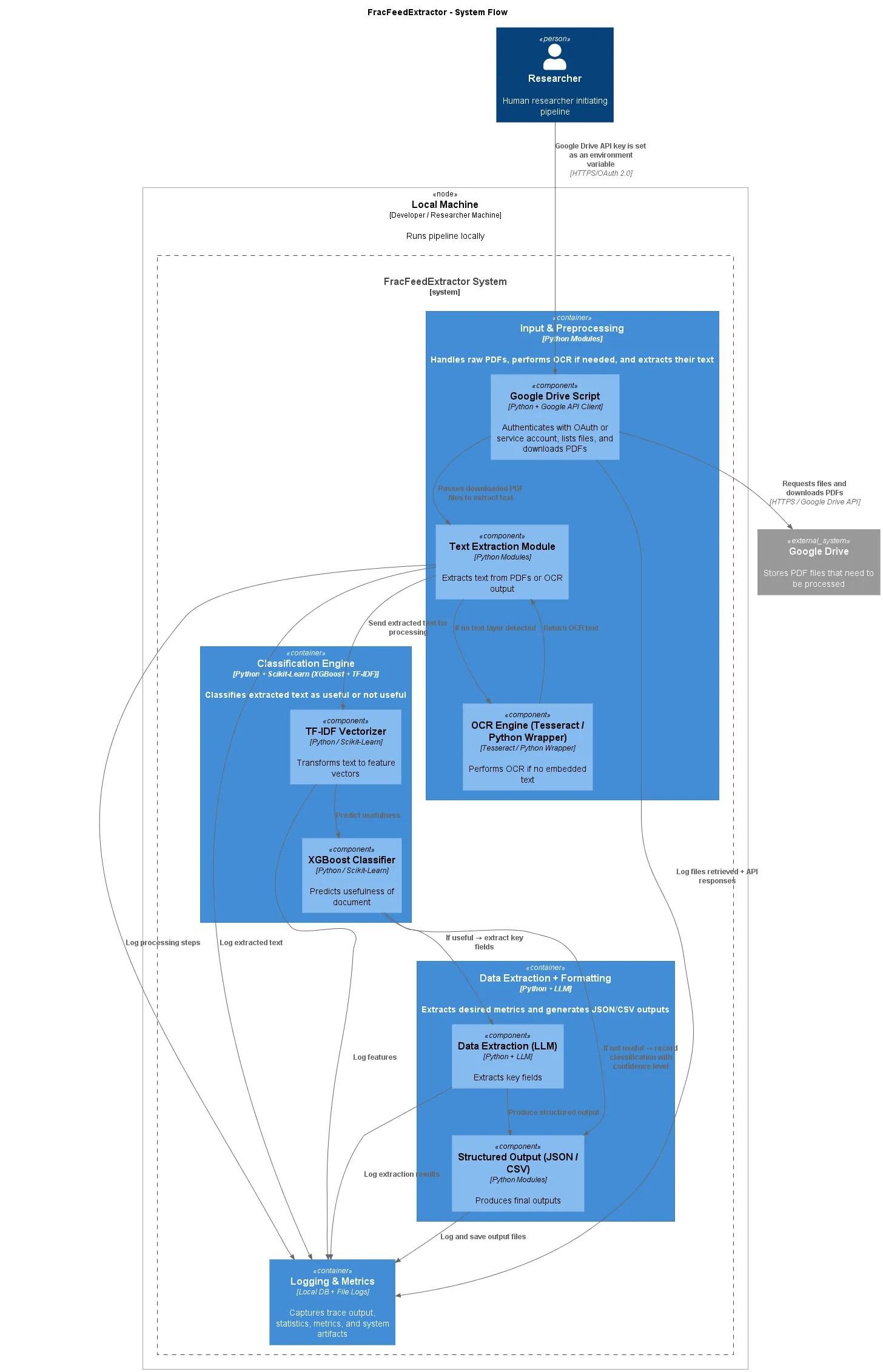
System flow diagram. A researcher runs the pipeline on a local machine: a Google Drive script downloads PDFs, a text extraction module falls back to Tesseract OCR, a TF-IDF and XGBoost classifier flags useful papers, an LLM extracts key fields to JSON and CSV and every stage logs to a metrics store.

Screens folders of ecological research PDFs with a TF-IDF and XGBoost classifier. Relevant papers go to a locally run LLM through Ollama, which extracts stomach counts and covariates into JSON and CSV with confidence and provenance. Built for Mark Novak’s lab to validate the fraction of feeding individuals metric without hand-harvesting a century of diet surveys. Running the LLM on-device keeps unpublished manuscripts in the researcher’s environment.

  • Built the text cleaning and section filtering stage and its tests. It strips DOIs, figure captions and numbered references, drops weak paragraphs by score and keeps section headers.
  • Added Google Drive ingestion and the pipeline scripts: a service-account Drive streamer with shared-drive support, .env secret loading, a fixed-sample CI pipeline and a full pipeline with API and local modes.
  • Set up CI by adding tests and coverage to the GitHub Actions workflow, then restructured it into staged preprocessing checks. Wrote CONTRIBUTING.md sections and README docs.
  • Added parallel extraction with a --workers N flag and switched the default model from llama3.1:8b to qwen2.5:7b. Added null-response retries, a larger context limit, a one-time spell checker load, GPU XGBoost training and an OCR bypass for parallel runs.
  • Added page-level provenance: each page is tagged [PAGE N] during extraction and every extracted metric records its source pages.

Key decision. CI streams a small fixed sample of PDFs from Google Drive without saving them, and full training runs as a separate job. The alternative was processing the whole corpus in CI. Splitting them kept runs reproducible, made scaling easier and kept CI separate from full training. Local Ollama mode also stayed the default over API mode because it was much faster.

Teammates built the XGBoost classifier and its 94% result, the Pydantic data models and the PyMuPDF and OCR extraction.

Team result: 94% accuracy screening papers as useful or not useful on a 234-paper held-out set

  • Python
  • XGBoost
  • scikit-learn
  • Ollama
  • Pydantic
  • PyMuPDF
  • Tesseract OCR
  • GitHub Actions
DubBetter RingOct 2025Raspberry Pi doorbell camera that classifies visitor activity and streams events to a web client.
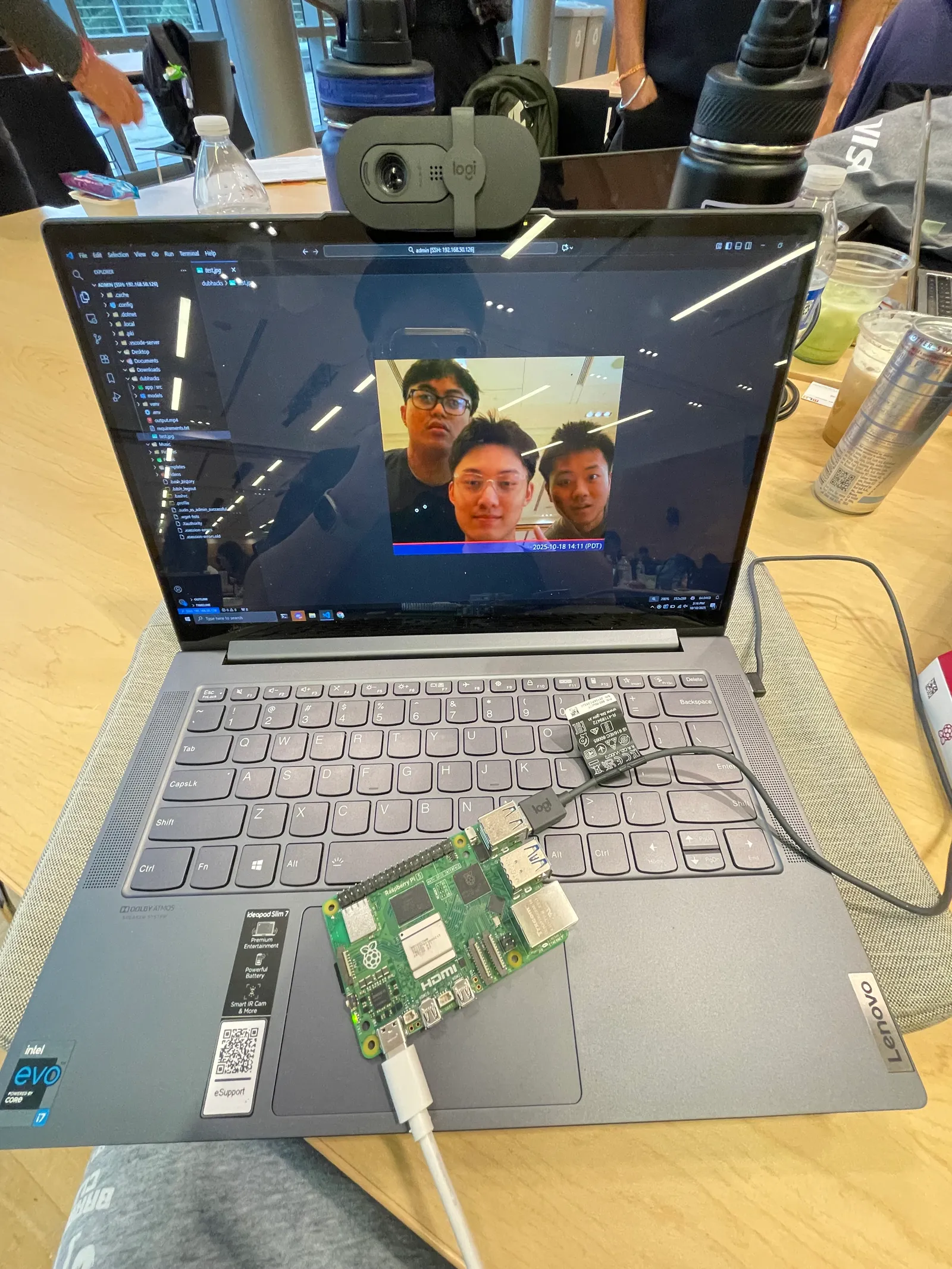
Gabriel Valdez, Raymond Cen and Ivan Wong, left to right, at DubHacks '25 with the doorbell prototype: a Raspberry Pi 5 connected to a USB webcam.

A privacy-first smart doorbell that keeps footage away from third-party companies. A USB camera on a Raspberry Pi 5 feeds AI models that classify activity at the door. The Pi acts as the backend and pushes events and a live feed to a React client over WebSockets.

  • Recorded our own doorbell-scenario videos as training data, since no suitable dataset existed.
  • Worked on training the activity model, which labels 5 activity classes.
  • Refactored the client socket module into a dynamic event registry. Removed a second per-event registration in subscribe() that made each callback fire twice per event, once through the global dispatcher and once directly.

Key decision (team). A two-stage model: a TFLite detector finds people, then a small Keras classifier labels sequences of their positions and is exported to TFLite. The model stayed only a few kilobytes.

  • Python
  • TensorFlow Lite
  • OpenCV
  • Keras
  • Socket.IO
  • React
  • Vite
  • Raspberry Pi 5
Heart Disease PredictorJun 2025 – Jul 2025scikit-learn pipeline and Flask app predicting heart disease risk, deployed to AWS and Azure.
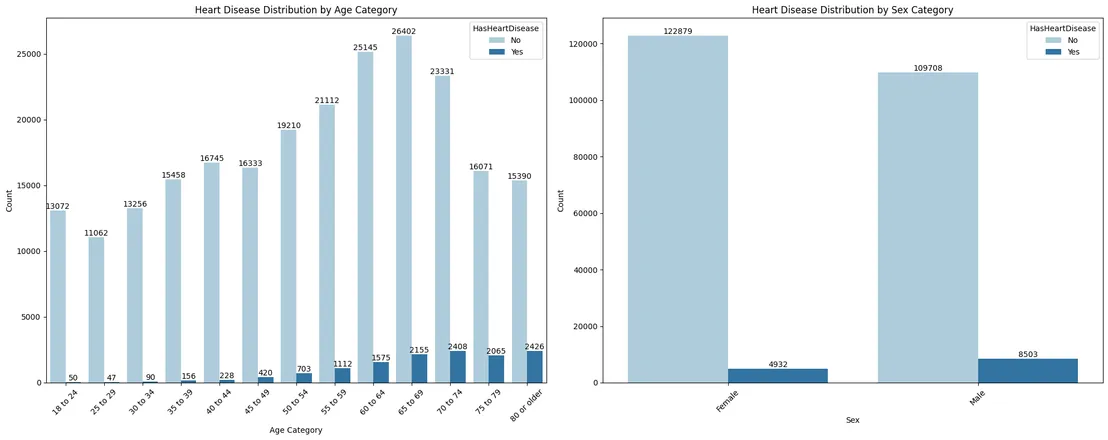
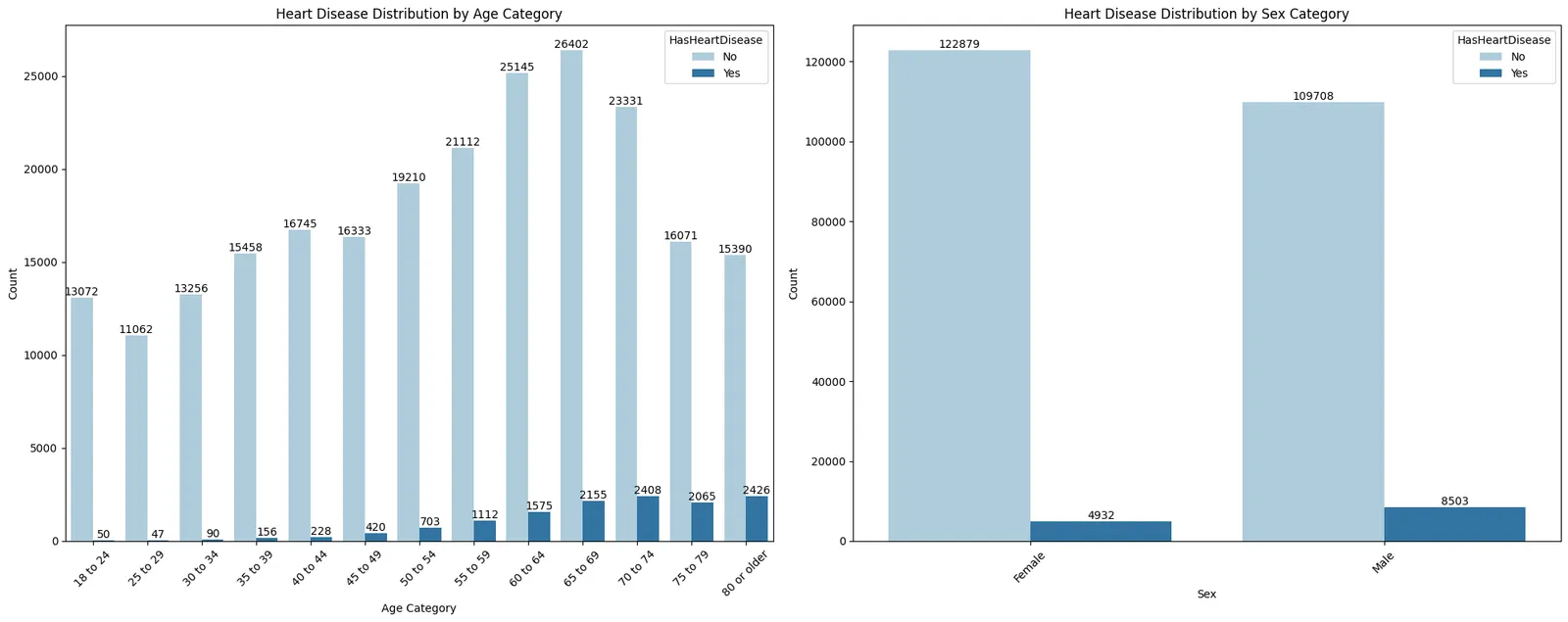
Two bar charts of heart disease counts by age group and by sex. Cases rise with age but stay a small share of every group.

Trains and compares classifiers on Kaggle’s Personal Key Indicators of Heart Disease data (target HadHeartAttack) and serves predictions through a Flask form. Built to practice the full lifecycle from EDA to cloud deployment.

  • Built a modular training pipeline with a stratified 30,000-row test split. It compares Logistic Regression, Random Forest, XGBoost, CatBoost, GradientBoosting and AdaBoost and picks the best by test F1.
  • Handled class imbalance with scale_pos_weight set from the negative-to-positive ratio. Only about 5.7% of training rows are positive, so predicting “no” for everyone would score about 94% accuracy. Recall is the number that matters here.
  • Built a Flask app with a /predict route and form templates.
  • Deployed three ways: Elastic Beanstalk with CodePipeline; ECR and EC2 through GitHub Actions; an Azure Web App. The deployments are now offline.

Key decision. Tuned in stages to balance performance and compute cost: RandomizedSearchCV for broad sweeps, GridSearchCV to refine, then HalvingGridSearchCV for the final run, which starts candidates on 1,000 rows and keeps the top third each round. The winning parameters were then fixed in the model definitions so training no longer reruns the search.

72.24% recall at 25.07% precision (86.16% accuracy) on a 30,000-row stratified held-out set

  • Python
  • scikit-learn
  • XGBoost
  • Flask
  • Docker
  • AWS
  • Azure Web App
  • GitHub Actions
Unlimited Games but No GamesDec 2024 – Jul 2025Classic games rebuilt in C++ with raylib.
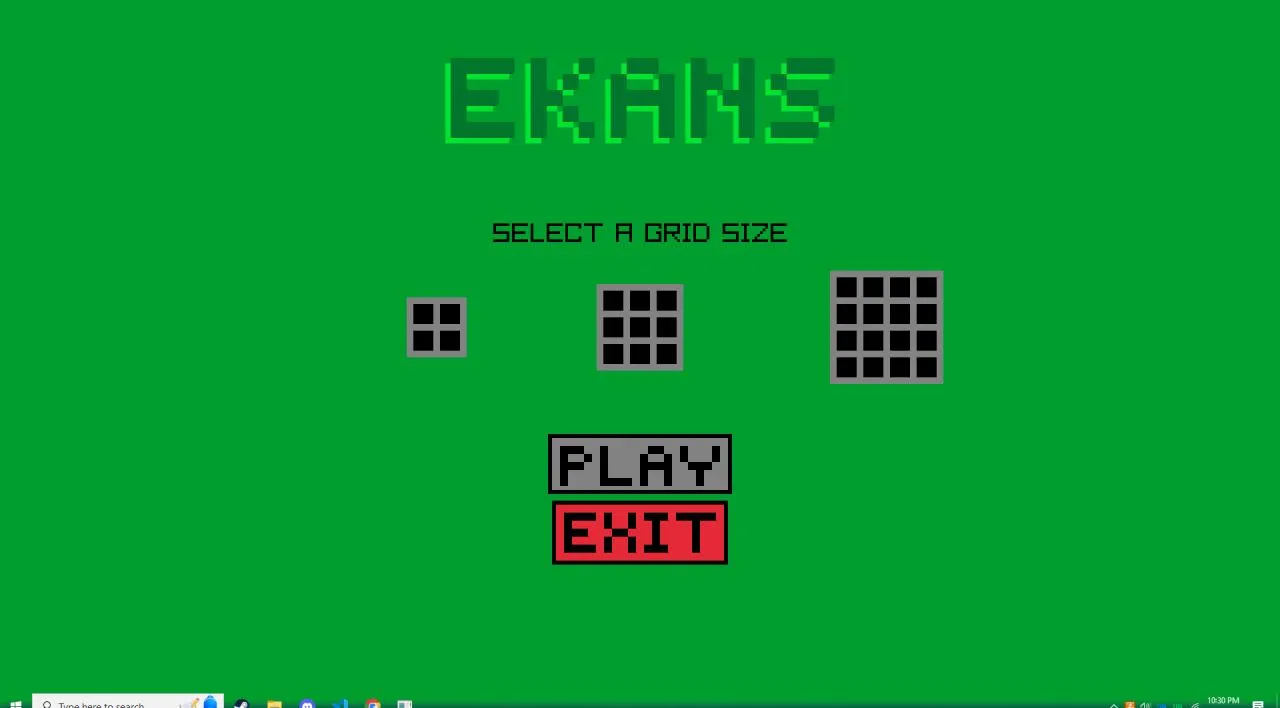
Home page of the snake game, labeled Ekans.

Recreates classic games in C++ with raylib, with a planned Qt launcher. Snake and Tetris are playable.

  • Built Snake: movement, apple spawning, wall and self collision, scoring, a home screen with three grid sizes and an end screen with play again and exit.
  • Started Pac-Man, including the map and wall collision. It is unfinished.

Key decision. Stored the snake’s body as a std::deque of grid cells. Each step pushes a new head and pops the tail, so a move costs the same at any length. The game draws at 60 FPS but steps the snake every 7 frames, which keeps movement speed separate from the frame rate.

Ivan Wong built Tetris and the launcher.

  • C++
  • raylib
  • CMake
BrainBurstApr 2025Swipeable flashcard app with Gemini-generated answer choices.

A TikTok-style infinite scroll of flashcards meant to replace doom scrolling with quick learning. Learn mode shows term and definition cards, and practice mode has Gemini generate wrong answers around the real one. The layout is mobile-first.

  • Built the Supabase data layer, including the get_distinct_categories RPC.
  • Wrote the row-level security policies in the Supabase project.
  • Built the flashcard add, edit and category popups and the flashcard manager.

Key decision (team). A few hours in, we learned Supabase provides auth, so we switched to Supabase Auth and direct Supabase queries from the frontend. This replaced the planned Express server.

Ivan Wong covered software design, auth and the AI setup. Gabriel Valdez covered UI styling and animations.

  • React
  • JavaScript
  • Supabase
  • PostgreSQL
  • Tailwind CSS
  • Swiper.js
  • Gemini API
  • Vite
TalkTaskJan 2025 – Mar 2025Voice-controlled to-do web app with AI task suggestions.
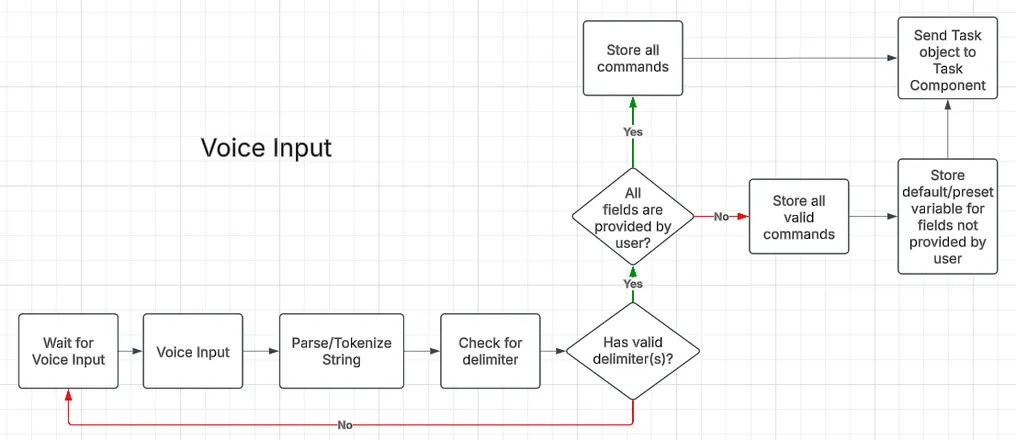
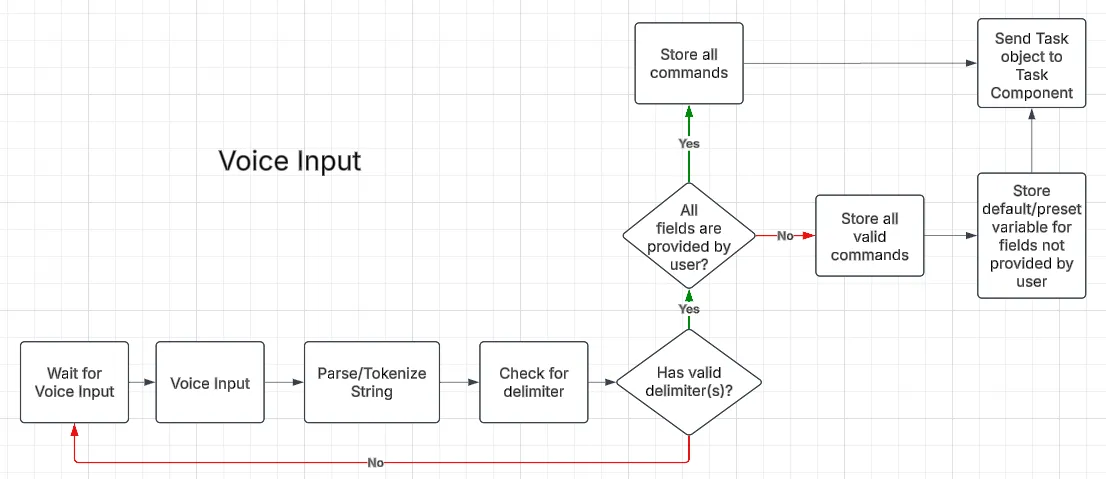
Voice input flowchart. The transcript is parsed and checked for valid delimiters, missing fields get default values and the result is sent to the task component as a task object.

Personal to-do tracker with speech recognition for hands-free task management. It has category and calendar views and Gemini-suggested tasks, and was designed with accessibility in mind.

  • Built the voice command pipeline: speech capture with the Web Speech API, then backend transcript parsing and command execution. Added the add, remove and mark grammar and priority-word conversion.
  • Built the task management UI: add and edit popups, filtering and sorting and auto-sort by priority. Moved the navigation to Tailwind.
  • Built the frontend for Gemini task suggestions and fixed a suggest-task time bug. A teammate built the Gemini backend.
  • Added database error handling for add, remove and edit, restructured the controllers and routes and fixed user ID scoping in categories.
  • Wrote the INSTALL.md and SETUP.md guides.

Key decision. Moved transcript parsing and command execution from the frontend to the backend, so the browser only captures speech and sends the transcript.

  • React
  • Node.js
  • Express
  • MongoDB
  • Web Speech API
  • Tailwind CSS
  • Axios
  • Gemini API
Gym Database SimulationDec 2024PHP and MySQL app simulating a gym's members, workouts, exercises, sets and reps.

Simulates running a gym, tracking members and their workout plans down to exercises, sets and reps. The database links members to dated workouts, each with a mental and physical rating, and workouts to exercises with reps, sets, rest time and weight. A junction table maps each exercise to the muscle groups it works.

  • Created the sample data.
  • Built the home, workouts and exercises pages. The workout and exercise pages use prepared statements, including a join from exercises to their muscle groups.
  • Added create and delete for workouts and exercises, with input checks on dates and 1 to 5 ratings.
  • Fixed a bug where members shared a workout ID.

Key decision. Scoped every workout to one member and one date. The add form rejects a second workout on the same date, the new workout’s generated ID is reused to insert its rating and deleting a workout removes its rating row first.

My teammate built the member pages.

  • PHP
  • MySQL
  • SQL
  • CSS